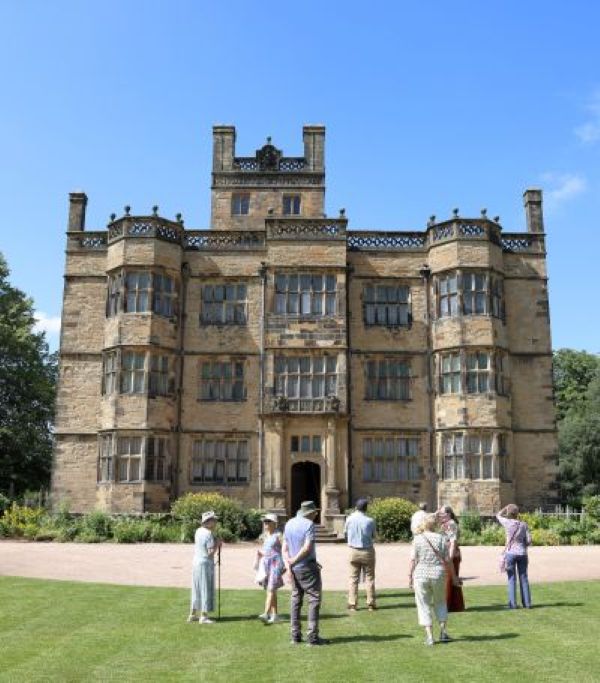
Our aim is to give members the opportunity to enjoy the experience of looking at old and historic buildings, both locally and further afield. Enjoyment is the Group’s primary objective. But it’s hoped that, at the same time members will develop their appreciation of the importance of old and historic buildings in understanding our cultural and artistic heritage.
Where we can we arrange out of hours expert-guided tours of the old buildings we visit so we can get maximum value from the trip. We usually travel by carshare but don’t worry if you aren’t able to drive - drivers are always reimbursed.
We try to visit a broad and varied range of old and not so old buildings. The emphasis is on history and architecture rather than just old buildings. If it is of interest we'll make the effort to visit it. As well as stately homes, castles and museums we explore old mills, gentry houses, libraries, civic buildings, follies, abbeys, schools, churches and agricultural buildings. We'll visit any building with architectural or historic interest, or both. We've even visited a signal box and a nuclear bunker!
For more information about the Old Buildings Group and its activities contact the group leader, Les Chandler, via this link.
| Status: | Active, open to new members |
| When: | Visits arranged on an ad-hoc basis |
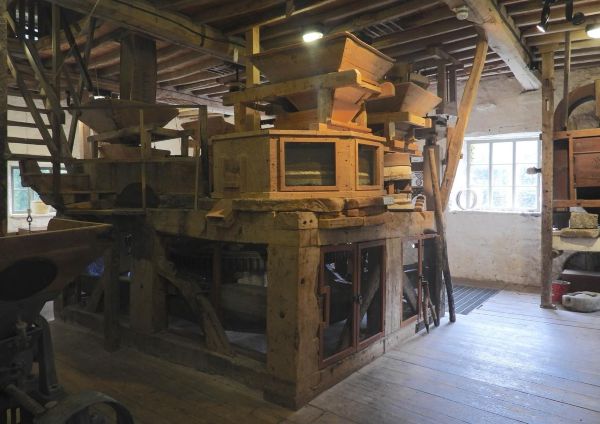
Above: Heron Corn Mill - 'Lowder' frame [Chris Chandler]
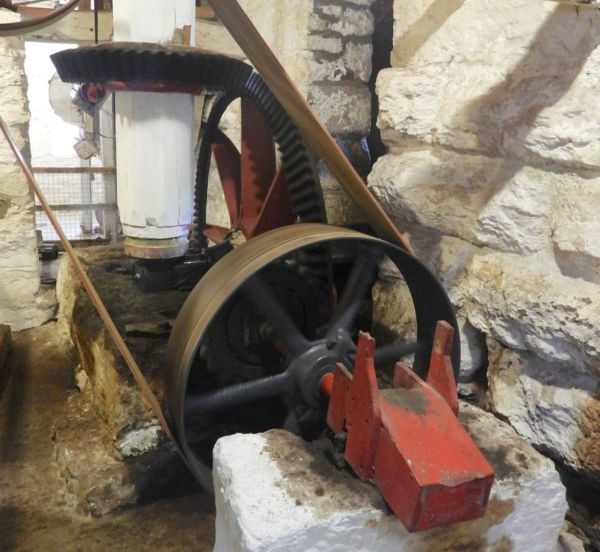
Below: Heron Corn Mill - main drive wheel [Chris Chandler]
Latest news
September took the group to Beetham near Milnthorpe for a private guided tour of Heron Corn Mill. This three-storey watermill and drying kiln, nestled on the River Bela, has been remodelled piecemeal over the centuries and is now a wonderland of wheels, cogs, belts and pulleys driving all manner of machinery. The mill was built in 1740 on the site of an earlier mill. It was originally an estate mill so local farmers were obliged to bring their corn to Beetham for milling. On arrival corn was taken to the threshing barn [now the visitor centre] to remove soil and grit. Then, in the mill building, it was spread a few inches deep across the floor of the drying kiln, fired from a wood burning oven on the floor below. Drying kilns were not a feature of mills further south but in this part of the world they were a key feature because of the wet climate. Once dried the corn was placed in sacks and hauled by pulley up to the top floor of the mill ready for grinding.
The milling process was originally labour intensive but in 1849 the building was remodelled and the milling machinery was replaced with the current, more sophisticated system. Once the grains are tipped into a hopper above the grinding stones the process of separating the kernels from the husks, grading them, and milling into flour, meal or flakes is all automated. This machinery is driven by a 14 ft diameter cast iron breastshot water wheel fed by an elevated wooden water trough (or "launder"). The grinding gear is supported on a ‘Lowder’ frame, also called a "Hurst frame" or "Hursting". The Lowder frame was once a common feature of wind- and watermills but there are now very few across the country. The frame supports the gears and millstones and minimises noise and vibration when the mill is in operation. The mill continued to produce flour and rolled oats until 1927 when the owners switched to producing animal feed. In 1955 it was decided to close the mill and operation ceased completely in 1958. The building then fell into disrepair but in 1973 the Beetham Trust was created to save the mill and in 1975 it opened as a museum. In 2013 Heritage Lottery funding enabled the mill to be fully restored to its former glory and now it supplies artisan flour and hydroelectricity to the paper mill across the river.