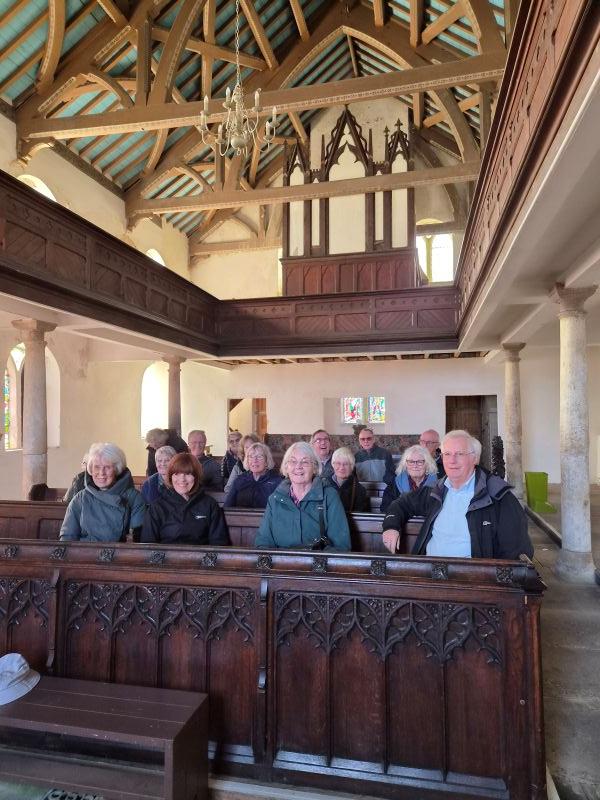
Our aim is to give members the opportunity to enjoy the experience of looking at old and historic buildings, both locally and further afield. Enjoyment is the Group’s primary objective. But it’s hoped that, at the same time members will develop their appreciation of the importance of old and historic buildings in understanding our cultural and artistic heritage.
Where we can we arrange out of hours expert-guided tours of the old buildings we visit so we can get maximum value from the trip. We usually travel by carshare but don’t worry if you aren’t able to drive - drivers are always reimbursed.
We try to visit a broad and varied range of old and not so old buildings. The emphasis is on history and architecture rather than just old buildings. If it is of interest we'll make the effort to visit it. As well as stately homes, castles and museums we explore old mills, gentry houses, libraries, civic buildings, follies, abbeys, schools, churches and agricultural buildings. We'll visit any building with architectural or historic interest, or both. We've even visited signal boxes and a nuclear bunker!
For more information about the Old Buildings Group and its activities contact the group leader, Les Chandler, via this link.
| Status: | Active, open to new members |
| When: | Visits arranged on an ad-hoc basis |
Latest news
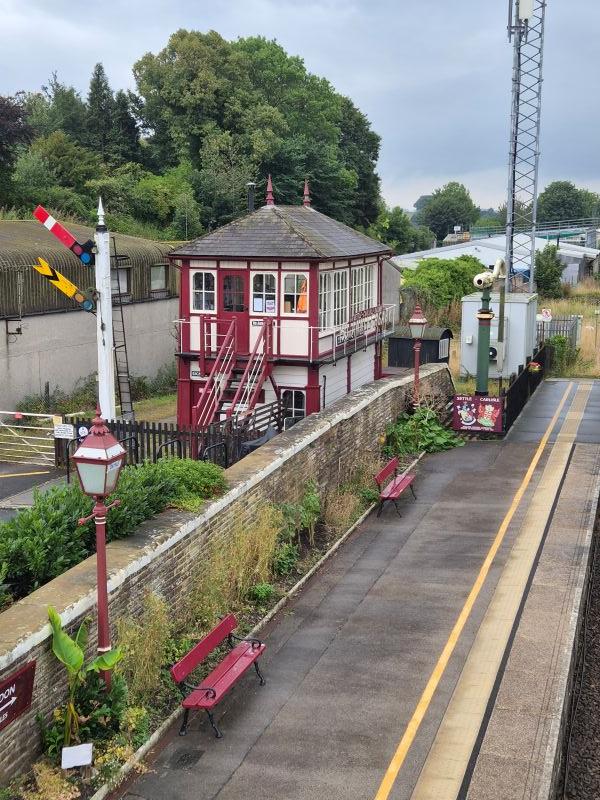
For our November meeting we focused on the Signal Box at Settle Station. First up we enjoyed a fascinating talk from Group Member John Tierney on the history of railway signalling. We learned that ‘time-interval working’, with trains starting their journey at controlled intervals, only worked if the train in front didn’t break down or was forced to slow down. So ‘railway policemen’ were appointed to control the trains using flags, lamps, and arm signals. It wasn’t long before the introduction of ‘block working’, where the line was divided into sections and mechanical ‘semaphore’ signals were used to prevent a following train from entering a block until the preceding train had cleared it. The signal boxes controlling each block of track used the newly introduced electric telegraph to pass on the information. After John's talk we made our way to the Signal Box at Settle Station where volunteer Dave Hill gave us a masterclass in the practicalities of manual signalling. He showed us how the system worked before the days of automation and electronic signalling. The semaphore signals were linked by wires to the levers in the signal box. The red signal [for stop] was operated by a red lever and the yellow signal, warning of the red signal ahead, had a yellow lever. The wires connecting the signals to the levers in the box were prone to snap, not least because seasonal temperature changes caused them to expand and contract. A key job of the signalman was to re-tension the wires frequently. Now we know why all signals are lights!